Free Book
Up Close From The Start
The Book No One Wants To Share
See why great headlines work, and how to write them. Free.
Connect to tomorrow's customer in 2 seconds. With a ton of examples that show what works, and why.
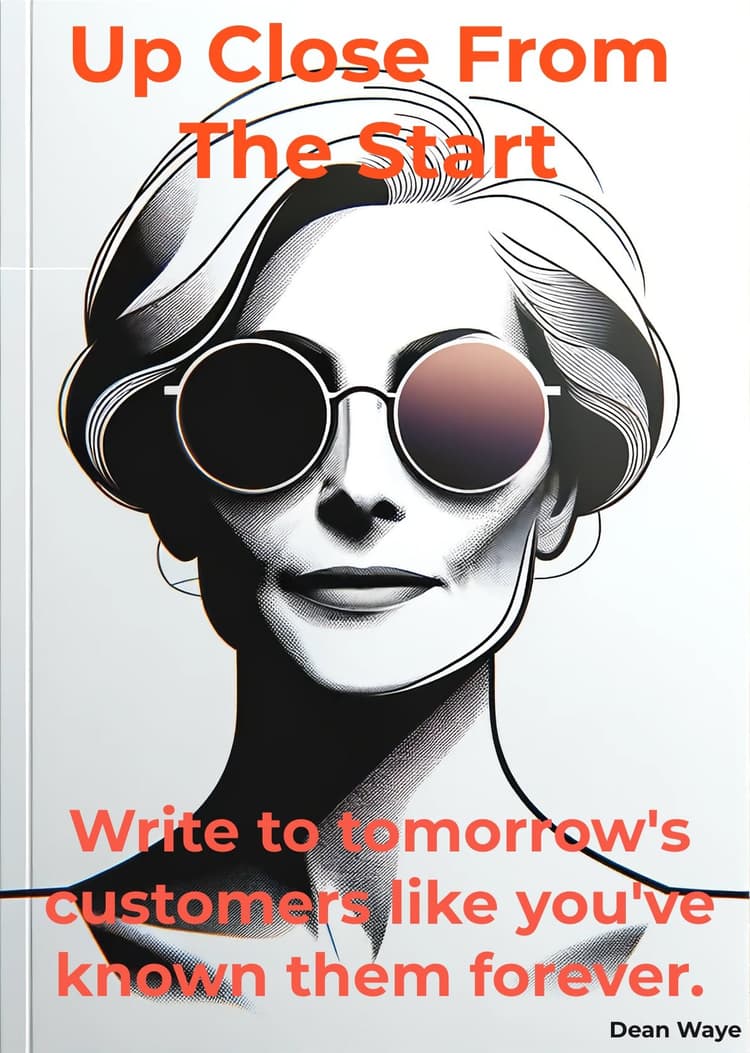
Write to Tomorrow's Customers Like You've Known Them Forever
Seven core principles inside:
01
Urgency and Novelty
Capture attention instantly by addressing urgent or novel aspects.
02
Negative Present and Positive Future
Highlight the current problem and a desirable future.
03
Aspiration
Inspire readers by painting a better future.
04
Assertion
Be clear and assertive to help readers feel secure.
05
Break Reality
Challenge readers' perceptions to engage them.
06
Do the Work
Simplify the message, making it easy for readers.
07
Subtext Persuasion
Use subtext to let readers create their own stories.
Frequently asked questions
- What is the Up Close From The Start headline writing guide?
- It's a free guide that breaks down the psychology behind B2B headlines that actually hook a buyer in two seconds. It covers seven core principles — including urgency, aspiration, assertion, and subtext — with real examples showing exactly what works and why.
- What makes a B2B headline different from a consumer headline?
- B2B buyers are reading for business value, not entertainment. They scan faster, distrust harder, and have less tolerance for vague promises. A great B2B headline needs to close the distance between the reader's current problem and a specific, credible outcome — in a line or two.
- Who should read this guide?
- Anyone writing copy that needs to earn attention from a skeptical business buyer: marketers writing email subject lines, ad copy, or landing pages; founders writing pitch decks or website headlines; and salespeople drafting cold outreach openers.
- How is this different from general copywriting advice?
- Most headline advice is written for consumer audiences or general web content. This guide is built specifically around how B2B buyers process and respond to messaging — including the role of trust, credibility signals, and professional skepticism in the reading decision.
Get Instant Access
Free, and everything stays between us.